
Why I Use Metal Discs When Under-boarding Ceilings
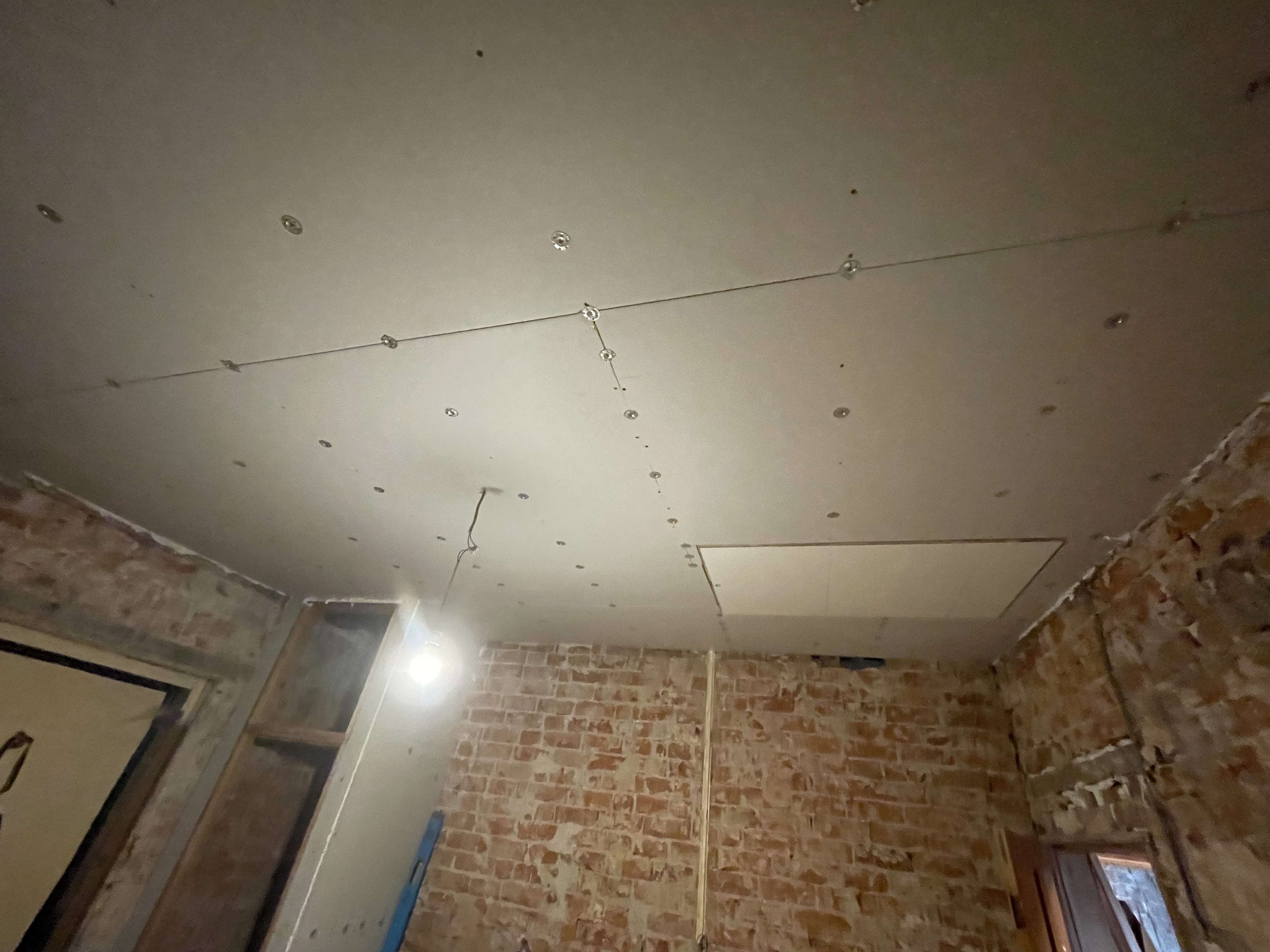
When I underboard a ceiling, you’ll often see me using metal discs (penny washers) on every other screw. It’s a small detail, but it makes a big difference to how long that ceiling stays looking sharp.
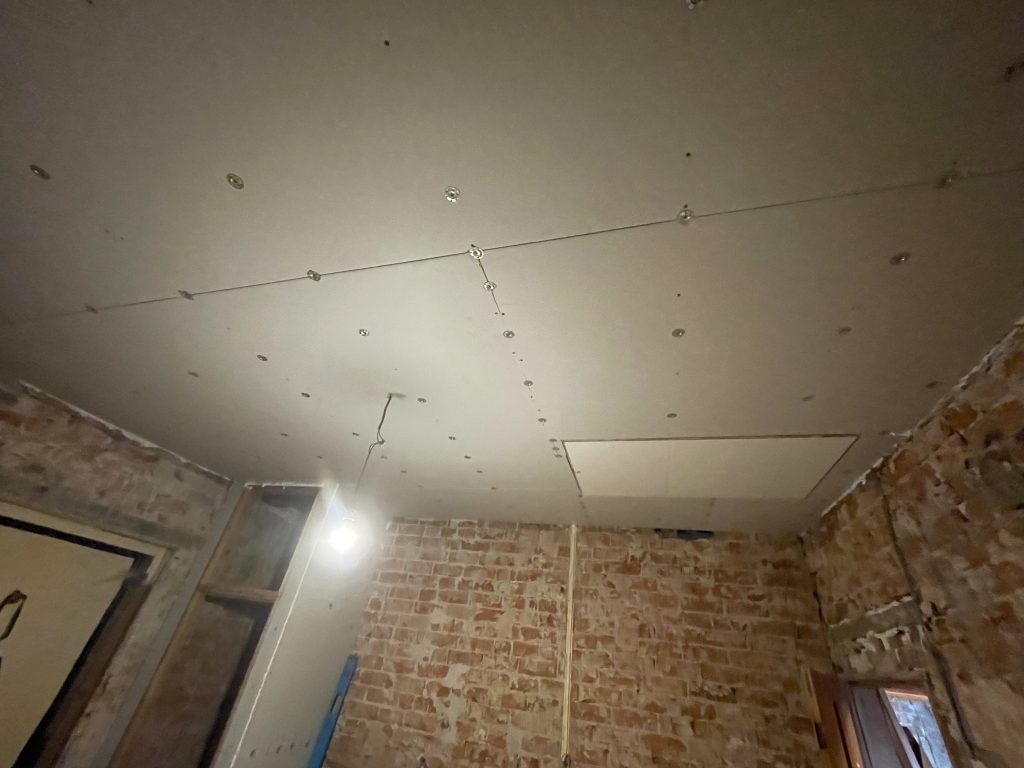
Most people just see a new, flat ceiling. I’m thinking about what it’s going to look like in five or ten years’ time – and that’s where the discs come in.
What Happens If You Don’t Pull Both Ceilings Up Tight
When you overboard or underboard, (different name for the same technique), you’re effectively sandwiching two layers of board to the same set of joists. If those two layers aren’t pulled up tight together, you can end up with:
•Tiny gaps between the old and new ceiling.
•Movement every time the joists flex or the room above is used.
•Hairline cracks following the joints and screw lines over time.
Cracks rarely appear on day one. They show up once the house has expanded, contracted and been lived in. Using discs is my way of taking the slack out of the system so that movement is kept to an absolute minimum.
How The Metal Discs Actually Work
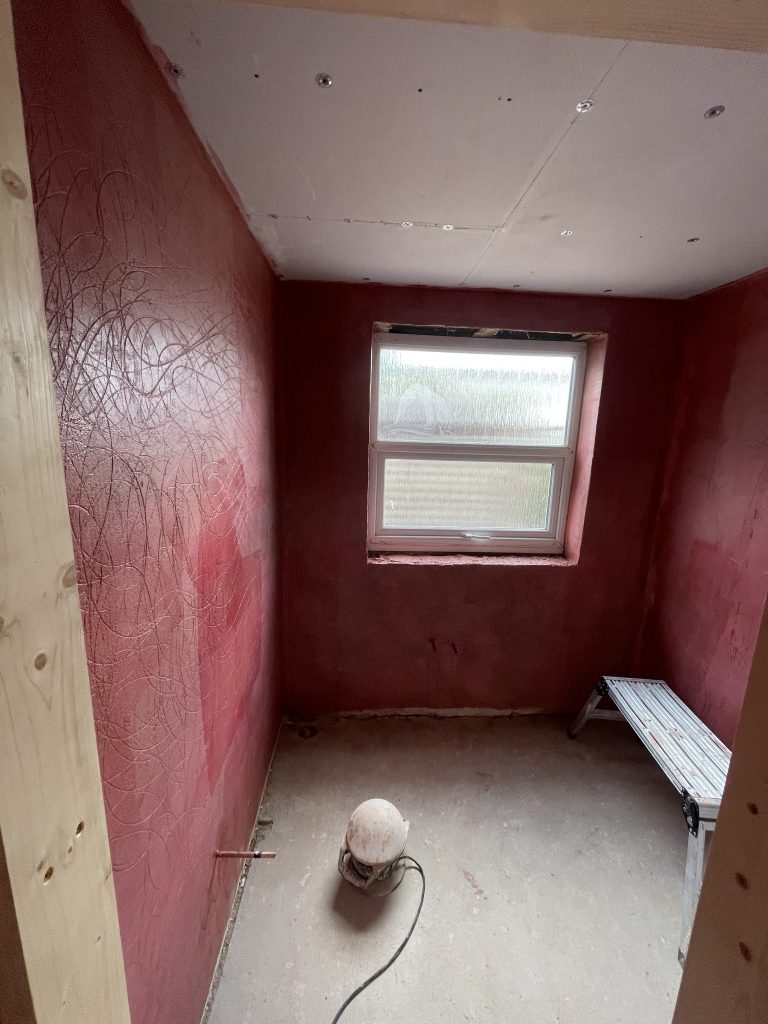
A normal drywall screw has a fairly small head, so its clamping area is limited to a tight circle around the screw hole. A metal disc spreads that pressure over a much wider area.
When I under-board/overboard:
•The disc helps pull the old ceiling up firmly to the joists.
•At the same time, it clamps the new board back to the old ceiling.
•The two layers end up working together as one solid unit rather than flexing separately.
By fixing discs on every other screw line, you get a consistent “pinching” effect across the whole ceiling, not just at the odd spot where a joist happens to be nice and straight. That even pressure is what helps stop future cracks.
Why I Don’t Put Discs On Every Single Screw
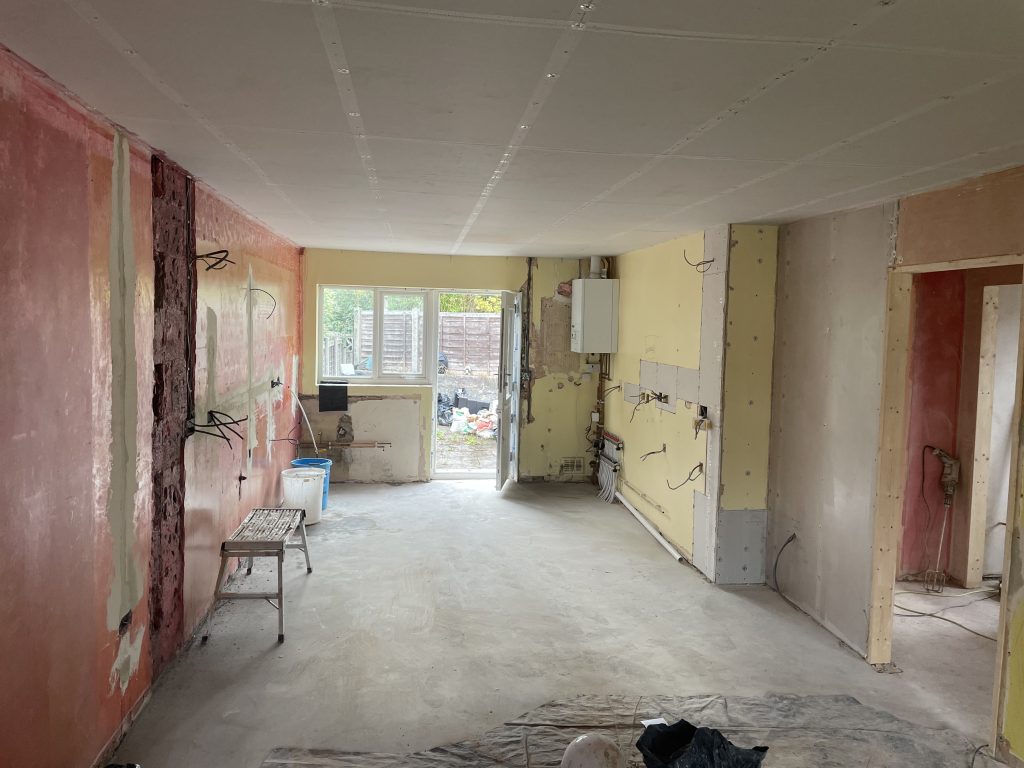
You might assume more is better and every screw should get a disc, but in practice that’s not necessary and can actually slow the job down without adding much benefit.
Using discs on every other screw gives you:
•Strong, even pull-up across the board.
•Less chance of “dishing” around individual fixings.
•A neat pattern of standard screws and disc screws that’s easy to follow as you work.
It also means I can keep a good rhythm: standard screws tie the board off, disc screws do the heavy lifting of pulling everything up tight, and together they give a solid, crack-resistant ceiling.
The Benefit For You As The Homeowner
From your point of view, the detail isn’t about the discs themselves – it’s about the ceiling you live with afterwards.
Using metal discs on every other screw when under-boarding helps to:
•Reduce movement and stress on the plaster finish.
•Minimise the chances of hairline cracks appearing later.
•Extend the life of the ceiling so you’re not redecorating again in a hurry.
It’s one of those little extra steps that takes me a bit more time and care on the day, but saves you hassle, mess and cost down the line.
Need Advice or a Quote?
If you spot any of these signs in your home, don’t wait for things to get worse. We’re happy to offer honest advice and a quote.
Contact CB Plastering Contractors:
www.alsagerplastering.co.uk/contact-us
✉ chris@alsagerplastering.co.uk
Let us help you restore your walls and refresh your home-get in touch today!
Connect With Us
If you found this article helpful and want to support us, you can Buy Me a Coffee here. Every coffee helps us share more tips and advice with homeowners across Alsager and Cheshire East & all over the UK. Thank you for your support!
For more plastering tips, behind-the-scenes videos, and project showcases, check out our YouTube channel: @cbplasteringcontractors.
© 2026. The content on this website is owned by CB Plastering Contractors. Do not copy any content (including images) without our consent.